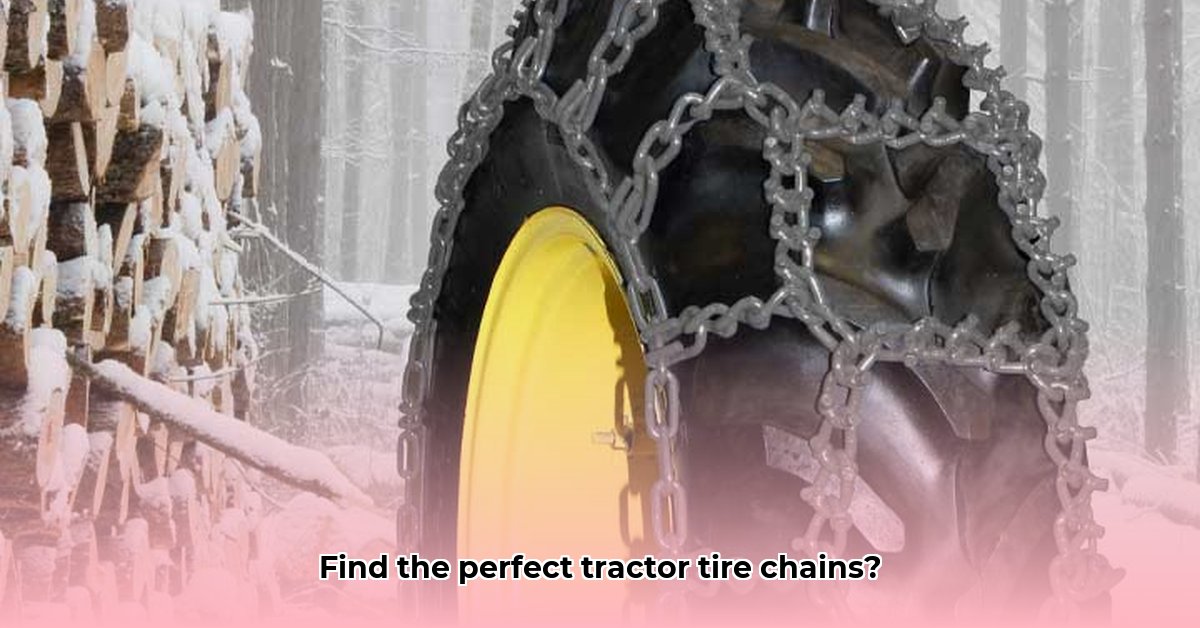
Finding the right 16.9-24 tractor tire chains shouldn't be a complicated process. However, the fragmented market and inconsistent information available can make sourcing the correct chains a challenge. This comprehensive guide provides actionable steps to help farmers and agricultural equipment businesses confidently purchase and maintain the right chains for their tractors. For more information on other sizes, check out our guide on different tractor tire chain sizes.
Understanding 16.9 x 24 Tire Chains
Before diving into the specifics of sourcing, it’s crucial to understand the different types and materials of 16.9-24 tractor tire chains. This knowledge will inform your purchasing decisions.
Chain Types and Their Applications
Two primary chain types exist: ladder chains and V-bar chains.
Ladder Chains: These chains feature a simple, ladder-like design. They offer good general-purpose traction and are relatively easy to install. They are a cost-effective solution for many applications.
V-bar Chains: These chains offer superior grip in challenging conditions like mud or deep snow due to their aggressive, V-shaped cross-links. While providing increased traction, they often wear faster and might be more difficult to install than ladder chains.
Material Considerations: Steel Grade and Durability
Most chains are constructed from steel, but the grade of steel significantly affects durability and lifespan. Higher-grade steel chains, while more expensive upfront, offer superior resistance to wear and tear, ultimately resulting in long-term cost savings. Lower-grade steel might be suitable for lighter applications but will require more frequent replacement. Isn't it worth investing in durability to minimize costly downtime?
Verifying Tire Size Compatibility: A Critical Step
Using incompatible chains is dangerous and can damage your tractor tires. Accurate measurement is paramount.
Step 1: Consult Your Tractor's Manual: The owner's manual definitively states the correct tire size. Look for the "16.9-24" designation.
Step 2: Check the Tire Sidewall: The tire sidewall clearly displays the tire size (e.g., "16.9-24").
Step 3: Verification is Key: Before proceeding with a purchase, double-check the tire size against the chain specifications. Even a minor mismatch can be problematic.
Important: Using incorrectly sized chains could lead to tire damage, chain failure, and potential safety hazards. Always verify compatibility.
Sourcing Strategies: Finding Reputable Suppliers
The market for 16.9-24 tractor tire chains is fragmented, requiring a strategic approach to sourcing.
Step 1: Identify Reputable Suppliers: Research online reviews, seek recommendations from fellow farmers, and consider suppliers with established histories and transparent return policies.
Step 2: Compare Prices Effectively: Don't solely focus on the initial price. Factor in the chain's expected lifespan, potential downtime due to early failure, and repair costs. A higher-quality chain with a longer lifespan might offer better value despite a higher initial cost.
Step 3: Evaluate Product Descriptions: Carefully examine product descriptions, paying close attention to material, construction details (e.g., hardened steel, cross-chain pattern), and warranty information.
Step 4: Understand Sales Strategies: Note whether chains are sold individually or in pairs. Purchasing pairs is often necessary for balanced traction and safety.
| Supplier | Sales Model (Pairs/Individual) | Strengths | Potential Drawbacks |
|---|---|---|---|
| TractorPartsAsap | Both | Wide selection; competitive individual pricing | Some customer reviews mention inconsistent service |
| TireChainsOnline | Pairs | Clear pricing for pairs; strong warranty support | Smaller selection compared to some other suppliers |
| FarmSupplyCo | Both | Excellent customer service; durable chains | Potentially higher prices; longer shipping times |
Installation and Maintenance: Prolonging Chain Lifespan
Proper installation and maintenance are crucial for maximizing the lifespan of your chains.
Step 1: Secure Installation: Follow the manufacturer's instructions precisely. Ensure chains are properly tensioned to avoid slippage, yet not so tight as to cause damage.
Step 2: Regular Inspections: Before each use, inspect chains for wear, damage, or loose links. Address any issues immediately.
Step 3: Safe Storage: Store chains in a dry location to prevent rust and corrosion when not in use. This helps preserve their longevity and performance.
Troubleshooting Common Issues
Even with careful selection and maintenance, problems can occur.
Chain Slippage: This usually indicates insufficient tension. Check tension and retighten as needed. Worn chains might require replacement.
Chain Breakage: This suggests potential overloading or impact with an object. Inspect chains for damage and replace broken or heavily worn sections.
Conclusion: Safeguarding Your Investment
Investing in the right 16.9-24 tractor tire chains is about more than just purchasing a product; it's about ensuring safety, productivity, and minimizing costly downtime. By following the steps outlined in this guide, you can confidently source, install, and maintain chains that meet your specific needs and budget, keeping your tractor operating at peak efficiency. Remember, proper planning and attention to detail save time and money in the long run.